5 Best Small E-Readers That Fit Right in Your Pocket
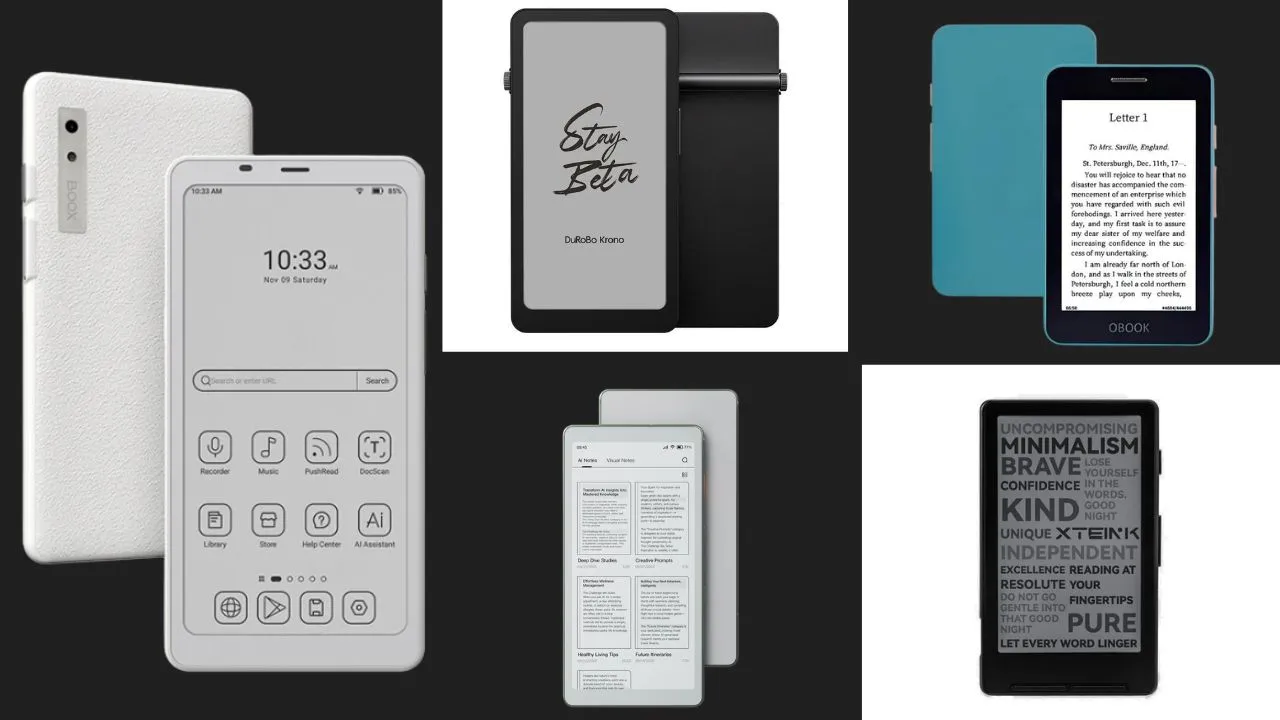
The best small e-readers solve a simple problem. Most full-size e-readers read well, but they do not always fit in a jeans pocket or disappear into a jacket pocket the way a phone-sized reader can.
A small e-reader lowers the barrier to reading because you can carry it everywhere, pull it out in short bursts, and avoid the notifications and visual noise that come with reading on a phone. Whether you are waiting in line, commuting, or grabbing five minutes before a meeting, a pocket-sized e-reader makes it easy to open a book instead of scrolling through social media.
This guide breaks down the five best small e-readers available today. Each pick includes a detailed look at specs, real-world experience, and a clear summary of who it’s best for.
What Makes a Great Small E-Reader?
A great small e-reader must feel light in your hand. Most readers in this category weigh between 58 and 175 grams. This weight allows you to read for hours without tiring your wrist. You also want a screen that looks sharp, usually with a high pixel density like 300 PPI. The screen size needs to be small enough to slide into your jacket pocket, yet large enough to display a comfortable amount of text. Most top-tier compact devices feature screens ranging from 3.7 to 6.13 inches. This size closely mirrors modern smartphones, making the device feel familiar in your hand.
The software also matters a lot. Some devices run Android, which lets you download apps like Kindle or Kobo. Others use simple systems that focus solely on reading to save battery power.
Battery life is another defining factor. Because these devices lack power-hungry LCD screens, they should last for weeks on a single charge. Finally, you should look for physical buttons. Turning a page with a click feels much more natural than swiping a screen.
Disclosure: This post contains affiliate links for XTEINK’s Affiliate+ campaign and the OBOOK E-Reader Affiliate Program. We may earn a commission on qualifying purchases made through these links, at no extra cost to you.
Quick List
| Device Name | Best For | Price |
|---|---|---|
| BOOX Palma 2 | Readers who want full Android flexibility and any reading app | Check Price |
| VIWOODS AiPaper | Premium build, latest Android, and built-in AI (ChatGPT, Gemini, DeepSeek) | Check Price |
| Durobo Krono | Unique tactile controls, built-in AI, and audio/note features | Check Price |
| OBOOK5 | Most pocketable device with front light, budget-friendly, DRM-free libraries | Check Price |
| XTEINK X4 Classic | Minimalist readers wanting the lightest, thinnest device with focused hardware | Check Price |
BOOX Palma 2 — Best Overall Small Android E-Reader

The BOOX Palma 2 is the best small e-reader for most people who want premium hardware and broad app support. It combines a 6.13-inch Carta 1200 screen, 300 ppi resolution, Android 13, 6 GB RAM, 128 GB storage, a 3,950 mAh battery, warm and cold front light, a microSD slot, and page-turn-capable volume buttons in a 170 g body.
It is one of the most capable pocketable readers because it runs third-party apps well, offers flexible E Ink refresh modes, includes access to Google Play, and still slips into a jeans pocket with ease.
Its biggest strengths are flexibility and polish. You can install Kindle, Kobo, Libby, Instapaper, and other Android apps, use the volume rocker for page turns, and enjoy a UI that is more refined than many other Android E Ink devices. Under the hood sits an octa-core Snapdragon 690 processor, 6 GB of RAM, and 128 GB of storage.
Battery life is genuinely impressive. With the front light off, you get up to 33 hours of reading on a single charge. Even with the front light set to 15% brightness, the Palma 2 delivers around 25 hours of runtime. Light daily use could stretch it into weeks.
The physical design feels well-thought-out. Volume buttons double as page-turn controls, a customizable smart button handles quick actions, and the power button includes a fingerprint sensor. The rough-textured back gives a secure grip, and the whole device slips easily into a jeans pocket.
The 16 MP rear camera has limited real-world utility. It struggles to focus on anything beyond close-up document scanning.
The downsides are price and complexity. At about $299 to $315, it costs much more than simpler rivals, and it has a steep learning curve with refresh settings, inconsistent fingerprint unlock, and a screen surface that benefits from a protector if you carry it loose in a pocket.
Best for: Readers who want full Android flexibility and can install any reading app.
Premium Alternative: BOOX Palma 2 Pro
AiPaper — Best for AI-Powered Reading

The VIWOODS AiPaper is the best small e-reader for premium design and modern software. It uses a 6.13-inch Carta 1300 display, the best black-and-white e-ink panel currently available at 300 PPI, delivering strong contrast and clean text.
At just 6.7 mm thick, it slides into a pocket more easily than almost any other Android e-reader in its category. Weighing roughly 140 g with an aluminum frame, it feels noticeably more premium than many competitors.
A 6nm octa-core processor and 4 GB of RAM power Android 16 with Google Play, supporting apps like Kindle, Kobo, Libby, and Chrome. The e-ink interface is clean and beginner-friendly, though enabling Google Play for the first time requires a few extra steps.
The most unique aspect of this device is its native AI integration. The system supports ChatGPT, Gemini, and DeepSeek, letting you summarize text or translate languages on the fly. A dedicated AI key on the side gives instant access to these models while reading, with no subscription fees required.
Battery capacity is lower than that of the BOOX or Krono at 2,580 mAh. It delivers 16 hours of pure reading with the front light off and about 12 hours at 40 nits with music and 4G active, which is decent but not class-leading.
However, there are a few catches. The device has no built-in speaker, so audiobooks require Bluetooth headphones. The front light on the standard version supports only cool white, with no warm-tone adjustment. The AI button is also easy to press accidentally, and the UI still leans too heavily toward notes and AI rather than pure reading.
Best for: Design-conscious readers who want premium build quality, the latest Android, and built-in AI.
Durobo Krono — Best for Smart Reading Features

The Durobo Krono takes a different approach to the pocket e-reader formula. It pairs a 6.13-inch Carta 1200 display at 300 PPI with Android 15, but the defining feature is its signature smart dial.
That dial sits on the left side and adjusts brightness on the home screen, scrolls through books when you read, and changes volume when you play audio. A single click refreshes the screen. A double click launches the Libby AI assistant. A long press starts the voice recorder. It is one of the most intuitive controls you would see on any e-reader.
The Krono runs on an octa-core processor with 6 GB of RAM and 128 GB of storage. It includes a dual-tone frontlight, dual microphones, a speaker, and Google Play support. Breathing lights on the back serve as reading reminders, adding a small but distinctive touch.
The built-in Libby AI assistant handles voice queries, note transcription, and AI summaries of your recorded memos. The AI can occasionally return inaccurate answers, so treat it as a helpful tool, not a fact-checker.
The Krono sits competitively in the small Android e-reader space. The build quality and dial design are genuinely fresh. But the navigation interface feels slightly sluggish in third-party apps.
This means the Krono might not be the top pick, but it is one of the more interesting ones. If you like trying new hardware ideas and want Android apps plus audio and note tools, it has real appeal.
Best for: Readers who want a beautifully designed device with unique tactile controls and built-in AI features.
OBOOK5 — Best Ultra-Portable Pocket eReader

If you want the smallest possible reading device without breaking the bank, the OBOOK5 Mini delivers. Its 4.26-inch e-paper display at 219 PPI fits in the palm of your hand, and the whole device weighs just 98 grams.
The OBOOK5 truly shines in portability and simplicity. The size feels genuinely pocket-friendly. It is smaller than the Palma line, easy to hold one-handed, and perfect for replacing bedtime phone scrolling or on-the-go reading. Pages turn at a satisfying pace, and the physical page-turn buttons on the side are a welcome addition that many readers prefer.
The front light and audio support help it stand out in the budget tier. Unlike the Xteink X4, it has a lit screen and a built-in speaker, making it more flexible for dimly lit rooms and audiobook playback, even though you cannot read and play an audiobook simultaneously in the native experience.
The device comes with 32GB of storage, giving you 23GB of usable space for your library. It runs OBOOK OS, a Linux-based system, rather than Android. That means no third-party app installs, so you are limited to sideloaded DRM-free books. It supports EPUB, MOBI, AZW3, TXT, and other common formats.
Battery life is strong for its size. A 1,200 mAh cell and a power-efficient Linux OS mean light readers can comfortably get through a week on a single charge.
Still, the compromises are real. The 219 PPI resolution is the biggest concern. Text is readable, but side by side with a 300 PPI screen, you notice the difference. The build quality, too, leaves something to be desired.
Best for: Budget-conscious readers who want the most pocketable device possible with a front light and are happy with DRM-free book libraries.
XTEINK X4 Classic (X4 V2) Ultra-Thin E-Reader — Best for Minimal Everyday Carry
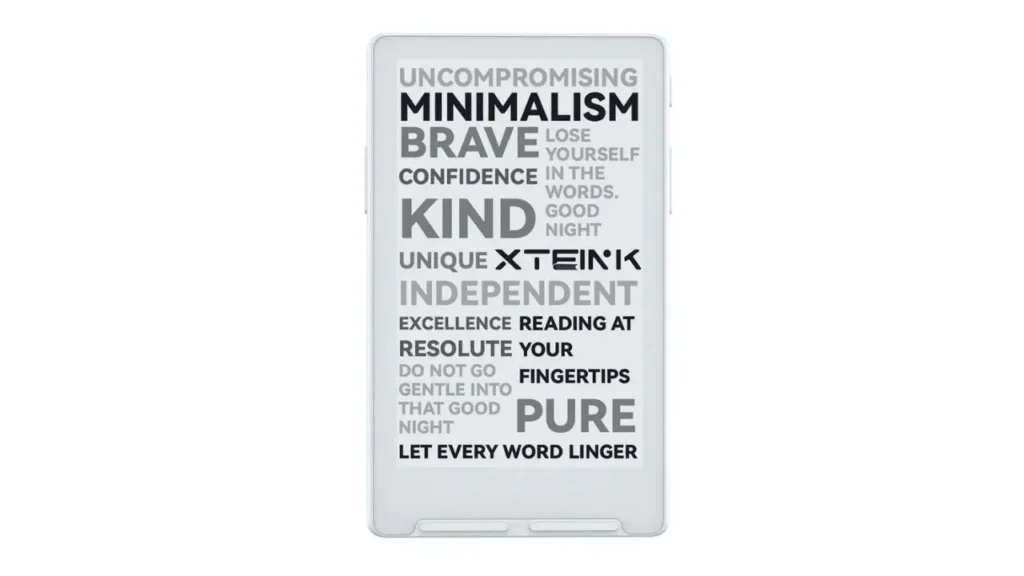
The XTEINK X4 Classic takes minimalism further than any other device on this list. At 4.9 mm thin and 68 grams, it is one of the lightest, thinnest pocket e-readers available today. Pick it up, and you genuinely forget it is in your pocket.
The X4 Classic packs a 4.3-inch e-ink screen at 219 PPI into a matte polycarbonate/plastic shell body. What makes it unique is how much it strips away. There is no touchscreen, no front light, and no third-party app support, which sounds limiting, but ultimately creates a clean, no-bloat reading experience. You load books via the built-in microSD card slot, which comes with a 16 GB card and supports up to 256 GB.
You turn pages with physical buttons or a shake, and once you settle into reading, it feels completely natural. Flipping pages with a button while holding the device one-handed is actually more ergonomic than tapping a touchscreen.
The X4 Classic also features a magnetic ring on the back, letting you snap it onto a phone or any metal surface. Powered by an ESP32-S3 chip and lean software, it boots remarkably fast. Battery life is equally impressive for its size. The 920 mAh cell lasts up to 14 days under regular use.
The stock firmware does have rough edges. Text rendering lacks anti-aliasing, making fonts look jagged on some content. The community-developed CrossPoint firmware addresses this, adding better EPUB support and expanded font options.
The X4 Classic lacks a frontlight. If you regularly read in low-light conditions, this is a significant limitation. If you need frontlight, you can check out the XTEINK X4 Pro.
X4 Classic supports TXT, EPUB, MOBI, PDF, and PNG formats natively, though Caliber can convert most formats before transfer.
Best for: Minimalist readers who want the most portable device possible, appreciate focused hardware, and enjoy tinkering with firmware.
5 Best Small E-Readers: Side-by-Side Specs Comparison
| Feature | BOOX Palma 2 | AiPaper | Krono | OBOOK5 | XTEINK X4 Classic |
|---|---|---|---|---|---|
| Screen Size | 6.13″ | 6.13″ | 6.13″ | 4.26″ | 4.3″ |
| PPI | 300 | 300 | 300 | 219 | 219 |
| CPU | Octa-core (Snapdragon 690) | 6nm Octa-core | Octa-core | dual core | ESP32-S3 |
| RAM | 6 GB | 4 GB | 6 GB | 128 MB | 0.512 MB (512 KB) |
| Battery | 3,950 mAh | 2,580 mAh | 3,950 mAh | 1,200 mAh | 920 mAh |
| Storage | 128 GB | 128 GB | 128 GB | 32 GB | 16 GB (expandable to 256 GB) |
| Weight | 170 g | ~140 g | 173 g | 98 g | 68 g |
| OS | Android 13 | Android 16 | Android 15 | Obook OS (Linux | XT system |
Key Features to Look for in a Small E-Reader
Shopping for a compact e-reader is straightforward once you know which features actually matter in daily use.
Resolution: Aim for 300 PPI if text quality matters. The BOOX Palma 2, Krono, and VIWOODS AiPaper all hit this mark. The OBOOK5 and Xteink X4 Classic use 219-220 PPI, which works fine for many readers but is noticeable under close inspection.
Operating system: Android devices like the Palma 2, Krono, and AiPaper let you install Kindle, Kobo, Libby, and other apps freely. Linux-based devices like the OBOOK5 limit you to sideloaded DRM-free books. The Xteink X4 Classic is fully closed but gains flexibility through its active community firmware.
Frontlight: If you read in dim environments regularly, a frontlight is non-negotiable. The Xteink X4 Classic has no frontlight. Every other device on this list includes one. The BOOX Palma 2 and Krono both offer warm-and-cool dual-tone frontlights for comfortable night reading.
Physical page-turn buttons: Every device on this list except the VIWOODS AiPaper uses physical buttons prominently. They allow one-handed reading without repositioning your grip to tap a screen, which matters during commutes and long sessions.
Expandable storage: The Xteink X4 Classic stands alone here with a microSD slot that supports up to 256 GB. The BOOX Palma 2 also includes a microSD slot. The VIWOODS AiPaper and Krono rely on fixed 128 GB internal storage.
Final verdict: Which Small E-Reader Should You Buy?
Your ideal choice depends entirely on how and where you read.
Buy the BOOX Palma 2 if you want maximum flexibility. It runs Android 13, supports all reading apps, includes a frontlight with warm-tone adjustment, and packs enough power to handle demanding apps. The price is steep but justified for daily power users.
Buy the VIWOODS AiPaper if build quality and the latest Android matter most. The Carta 1300 screen is exceptional, the aluminum frame feels premium, and Android 16 keeps it relevant for years. The lack of a speaker is a drawback, but the AI integration and optional SIM card support make it uniquely capable.
Buy the Krono E-Reader if the smart dial speaks to you. It offers the same screen and specs as the Palma 2 at a slightly lower price, plus Android 15 and genuinely beautiful hardware design. It’s a compelling pick if you value tactile controls and built-in AI note-taking.
Buy the OBOOK5 if you want the absolute smallest, lightest reading device and primarily read DRM-free EPUB or MOBI files. It is by far the most affordable option and still delivers a real frontlit e-ink experience.
Buy the Xteink X4 Classic if you want the lightest, thinnest device that nearly disappears in your pocket. At just 68 grams, it removes every barrier to carrying a reading device everywhere. Accept the no-frontlight limitation, and it becomes a remarkable daily companion for readers who read in good light conditions.
Recommended Reading
14 Boox Palma Tips and Tricks: Master Your E-Ink Device
Picked the BOOX Palma 2 as your go-to pocket reader? This guide unlocks its full potential, from fine-tuning E Ink refresh modes and mastering the volume-button page turns to getting the most out of Android app installations. Essential reading for anyone settling into their new device.
E-Readers vs. Tablets – Which Is the Best Device for You?
Still weighing whether a dedicated e-reader is the right move over a smartphone or tablet? This deep-dive explores the real-world differences in eye comfort, battery life, portability, and app ecosystems, giving you the broader context to feel confident about your compact reading setup.
Frequently Asked Questions (FAQs)
The two smallest e-readers in 2026 are the OBOOK5 Mini and the Xteink X3. The OBOOK5 has a 4.26-inch screen, and the X3 has a 3.7-inch screen, but the X3 is the overall smaller device at just 5.1 mm thick and 58 grams, making it the lightest and thinnest pocket e-reader available.
Most small e-readers have screens ranging from 3.7 to 6.13 inches. This range mirrors modern smartphone sizes, making them feel familiar in hand while still fitting in a jeans or jacket pocket. If text readability matters most, a screen closer to 6 inches with 300 PPI resolution offers a noticeably sharper reading experience.
Most small e-readers include physical page-turn buttons, making them one of the most important features to look for. Four out of five top compact e-readers in 2026- the BOOX Palma 2, Durobo Krono, OBOOK5 Mini, and Xteink X4 Classic- all use physical buttons for page turning. The only exception is the VIWOODS AiPaper, which uses a touchscreen-only design paired with an ultra-slim 6.7 mm aluminum build.
Yes, most small e-readers support audiobooks. The BOOX Palma 2, Krono, and OBOOK5 Mini have built-in speakers. The VIWOODS AiPaper and Xteink X4 Classic require Bluetooth headphones since they have no built-in speaker.
Battery life varies widely by device. The BOOX Palma 2 lasts up to 33 hours with the front light off, and light use can stretch it to weeks. The Xteink X4 Classic lasts up to 14 days on its 920 mAh cell thanks to lean firmware. The VIWOODS AiPaper delivers around 16 hours. Android-based readers generally last days to a couple of weeks, depending on brightness and app usage.